Insights

Get investor insights

See the results we've achieved with our clients.
Article
YOUR KPIs ARE EITHER TOOLS OR WEAPONS
This post explains how inconsistent KPI disclosure damages investor trust. It argues that when companies highlight metrics only while they’re improving, then change definitions, replace KPIs, or stop showing history when trends weaken, investors assume management is hiding something. The post lays out the cost of “KPI games,” including lower trust, more conservative assumptions, and less focus on the company’s strategy. It recommends introducing new KPIs with clear rationale, historical recasts, transition periods, and consistent quarter-to-quarter disclosure.
Article
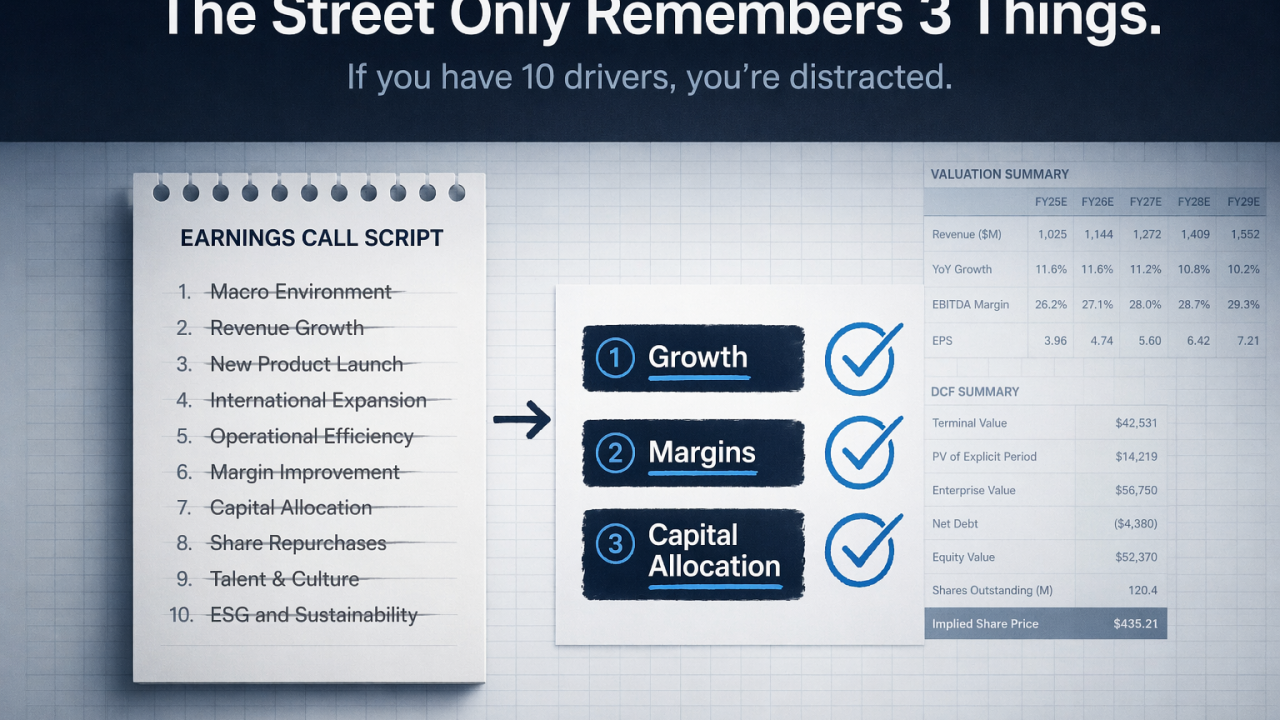
The Street Only Remembers Three Things
This post argues that earnings messaging should focus on the few business drivers that actually move revenue or margins. It explains that if management tries to communicate 10 priorities, investors won’t retain any of them, and the company may have a focus problem. The post recommends identifying the three most important levers, making them concrete, aligning leadership around them, and using the earnings script as a forcing function for sharper internal focus and clearer investor communication.
Article
Guidance Is Optionality, Not Accuracy
This post argues that guidance shouldn’t be treated as a forecasting contest. It should be used to preserve optionality across the full year. The post explains how management teams often box themselves in by setting guidance too tightly, over-signaling confidence, or “guiding on the guide.” It frames beat-and-raise cadence as something that’s engineered through disciplined expectations management, not luck. The post gives CFOs a practical checklist for setting guidance that leaves room to execute, absorb noise, raise later in the year, and protect credibility.
Article
The Setup Is the Story
This post explains why stocks trade on results versus the setup investors bring into the quarter. It argues that management teams often create expectation problems weeks or months before earnings through guidance, tone, KPI emphasis, peer comparisons, analyst narratives, and casual follow-up comments. The post shows how companies can deliver “fine” quarters and still get punished if they’ve trained the Street to expect more. It recommends a setup audit before earnings or conferences to understand what investors actually expect, where that expectation came from, and whether delivering guidance will feel like a win or a disappointment.
Article
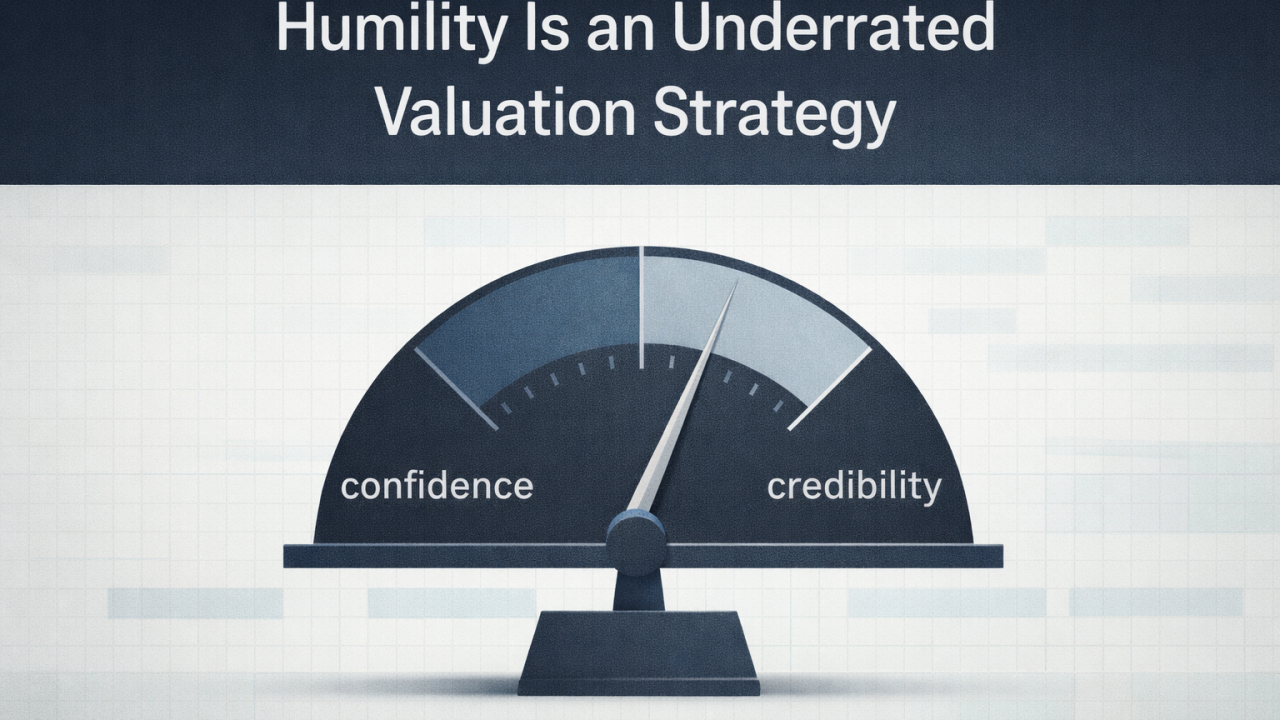
Humility Is an Underrated Valuation Strategy
This post explains why tone is a core part of investor credibility. It argues that management teams often overvalue optimism and undervalue humility, even though investors judge how leaders discuss risk, uncertainty, misses, and guidance. The post shows how overconfidence can create a trust discount, even when results are fine, while grounded communication preserves optionality in the numbers, the narrative, and investor psychology.
Article
Every Investor Question Is a Modeling Exercise
This post explains that investor questions are rarely just qualitative. They’re usually attempts to determine what numbers belong in a model, including revenue, margins, free cash flow, capital allocation, and valuation assumptions. It argues that management teams should stop answering questions as if investors want commentary, and instead prepare for Q&A by mapping likely questions to the specific model inputs investors are testing. The post gives a practical prep framework for helping CEOs, CFOs, IR, and FP&A deliver answers that give investors enough structure to update their assumptions with more confidence.
Case Study
$2bn Software Company Entering a Model Transition
Management doesn’t always provide concise, direct answers to questions which can leave investors feeling unsatisfied. We then helped them script their earnings calls, Q&A, and investor presentations (including an investor day) to tell the story while also releasing a series of new KPIs that investors used to gauge the company’s progress through the transition.
Case Study
$5bn Hardware Company Lacking Investor Credibility
The client (under NDA) was looking for someone to help them fix their sagging stock price, which was lagging behind their peers despite several quarters of beating consensus estimates.
Case Study
$5bn Software Company with a Lagging Multiple
Management had a history of over-promising and under-delivering, which we needed to correct. Also, the business model transition created a layer of opacity that only increased disclosure, and new KPIs could solve.
Case Study
$14bn Software Company in Model Transition
After many years of disappointing results, investors lost interest in this company. Additionally, the company’s financial disclosures made it impossible to see all the changes going on “under the surface.”
Article
How the Street Quietly Rewrites Your Story Without You Noticing
This post explains that expectation problems usually don’t appear suddenly on earnings day. They build slowly over several quarters through tone, guidance, early beats, KPI framing, and management’s answers to tough questions. The post argues that leadership teams often misdiagnose the first visible stock reaction as the problem, when the real issue started earlier as investors quietly raised their baseline assumptions. It recommends a quarterly expectations audit to catch drift before it turns into valuation pressure.
Article
The Art of Setting 2026 Guidance Without Backing Yourself Into a Corner
This post reframes guidance as a tool for preserving optionality, not simply predicting the year accurately. It explains why management teams often get into trouble by setting expectations too aggressively early in the year, leaving little room for July and October earnings calls. The post argues that strong guidance strategy requires discipline, credibility, and restraint. The goal is to give the business room to operate, create space for upside, and avoid training the Street to expect more than the company can consistently deliver.
Article
Running a Great Company Is Not Enough to Have a Great Stock
This post explains why strong company execution doesn’t automatically translate into strong stock performance. It frames management’s job as two separate games: running the company and managing the stock. The first depends on operations, strategy, products, and customers. The second depends on expectations, credibility, consistency, and how investors underwrite the future. The post argues that many companies disappoint in the market because they only play the operating game and ignore how the Street models risk, confidence, and valuation.
Article
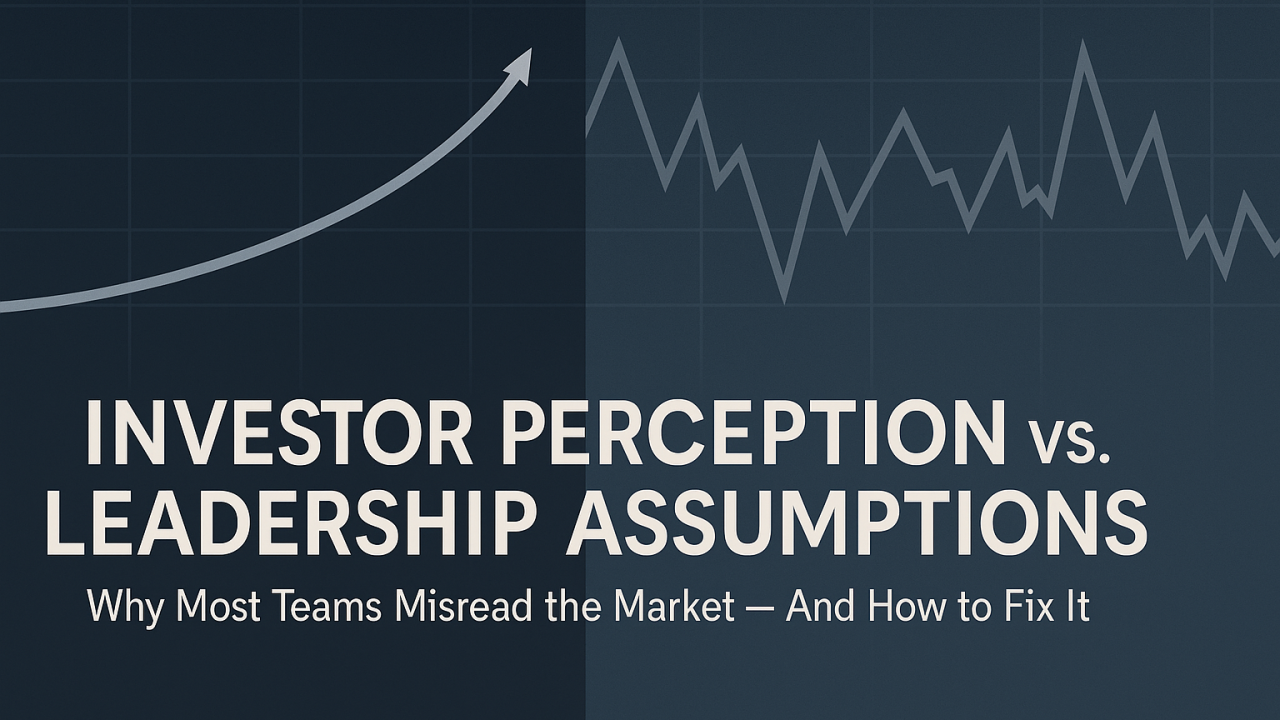
What Investors Really Think of Your Company (And Why Your Leadership Team Probably Has It Wrong)
Leadership teams often overestimate how clearly investors understand their company. The post explains how perception gaps form when the internal story doesn’t match external signals, especially around numbers, trends, tone, and credibility. It argues that CEOs, CFOs, and IROs should use December to recalibrate messaging before January conferences by focusing on what investors actually care about, addressing trust issues directly, and aligning the narrative with the financial reality.
Article
Prepare for IPO: Essential IPO Readiness Checklist & Strategy
Ready to go public? Hold on a second! You need to properly prepare for IPO. Resurge gives you the essential IPO readiness checklist and strategy to succeed.
Article
The Strategic Investor Relations Playbook for CEOs
If your company's strong performance isn't reflected in its stock price, the problem is your investor relations strategy. This CEO's playbook, from a 20-year investor and former public company SVP, reveals how to move beyond mere compliance to engineer the investor conviction that closes valuation gaps and earns premium multiples.