Article
YOUR KPIs ARE EITHER TOOLS OR WEAPONSThis post explains how inconsistent KPI disclosure damages investor trust. It argues that when companies highlight metrics only while they’re improving, then change definitions, replace KPIs, or stop showing history when trends weaken, investors assume management is hiding something. The post lays out the cost of “KPI games,” including lower trust, more conservative assumptions, and less focus on the company’s strategy. It recommends introducing new KPIs with clear rationale, historical recasts, transition periods, and consistent quarter-to-quarter disclosure.
Read Article
Article
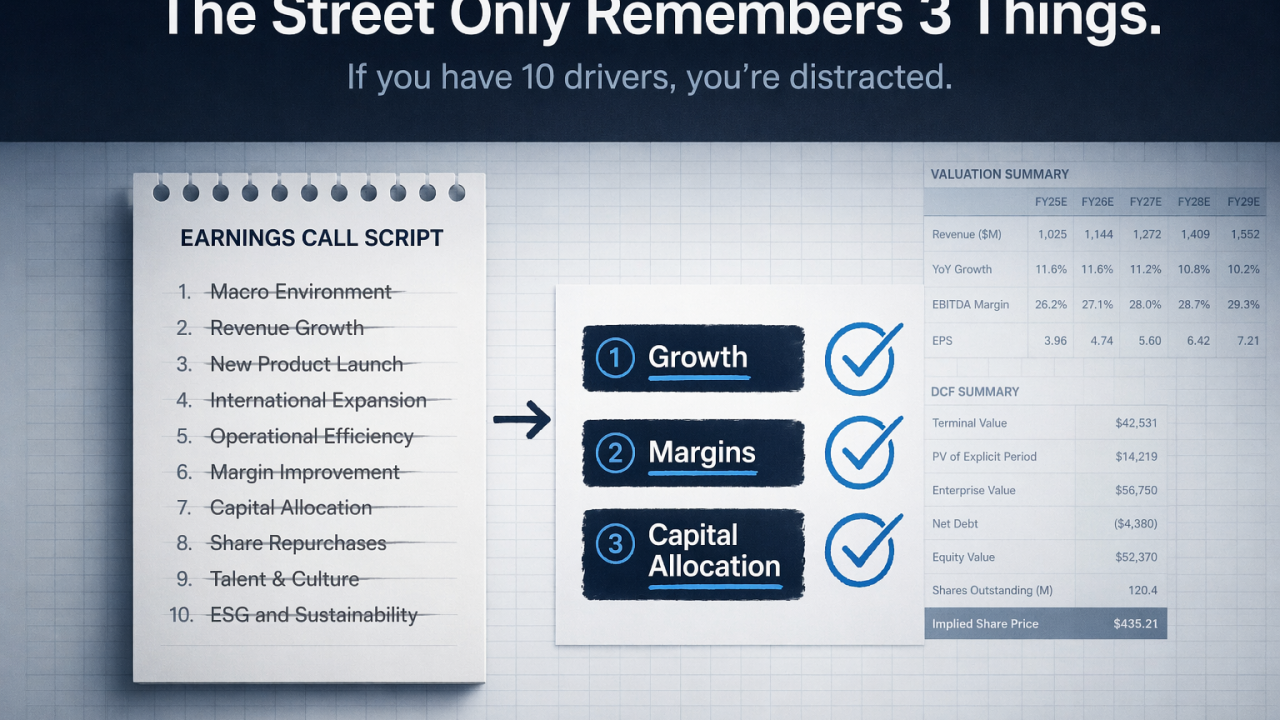
The Street Only Remembers Three ThingsThis post argues that earnings messaging should focus on the few business drivers that actually move revenue or margins. It explains that if management tries to communicate 10 priorities, investors won’t retain any of them, and the company may have a focus problem. The post recommends identifying the three most important levers, making them concrete, aligning leadership around them, and using the earnings script as a forcing function for sharper internal focus and clearer investor communication.
Read Article
Article
Guidance Is Optionality, Not AccuracyThis post argues that guidance shouldn’t be treated as a forecasting contest. It should be used to preserve optionality across the full year. The post explains how management teams often box themselves in by setting guidance too tightly, over-signaling confidence, or “guiding on the guide.” It frames beat-and-raise cadence as something that’s engineered through disciplined expectations management, not luck. The post gives CFOs a practical checklist for setting guidance that leaves room to execute, absorb noise, raise later in the year, and protect credibility.
Read Article
Article
The Setup Is the StoryThis post explains why stocks trade on results versus the setup investors bring into the quarter. It argues that management teams often create expectation problems weeks or months before earnings through guidance, tone, KPI emphasis, peer comparisons, analyst narratives, and casual follow-up comments. The post shows how companies can deliver “fine” quarters and still get punished if they’ve trained the Street to expect more. It recommends a setup audit before earnings or conferences to understand what investors actually expect, where that expectation came from, and whether delivering guidance will feel like a win or a disappointment.
Read Article
Article
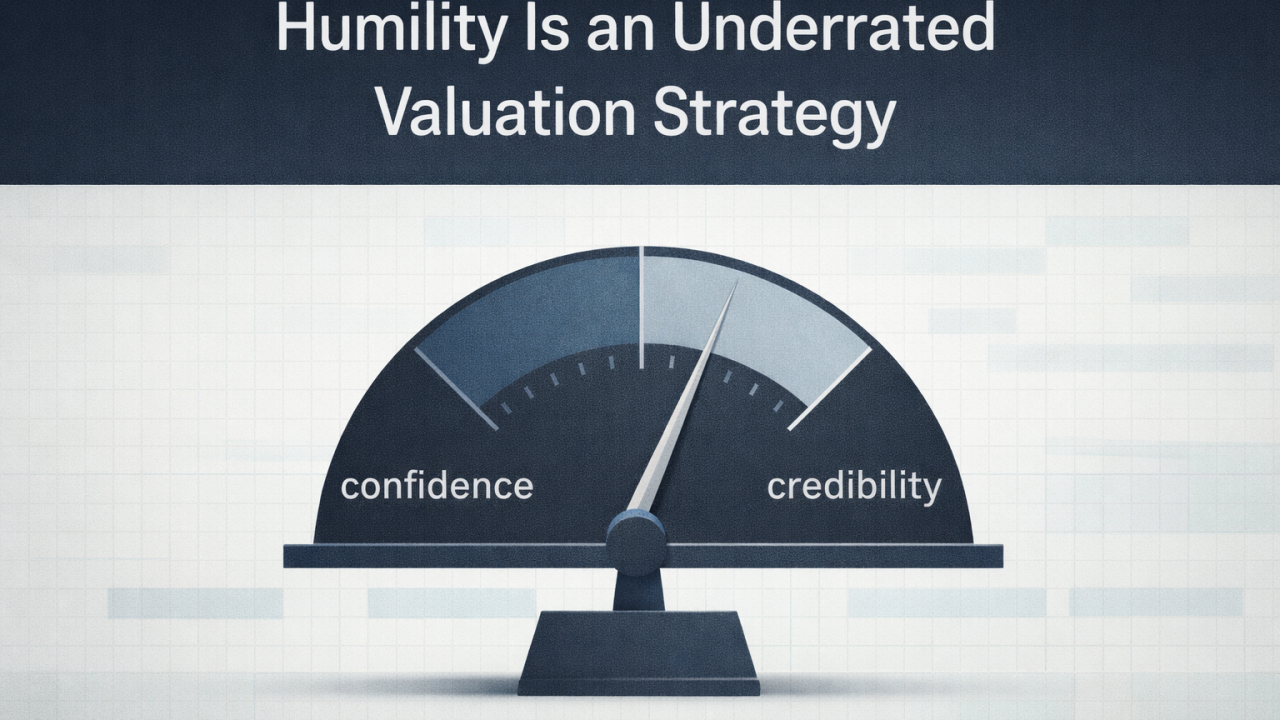
Humility Is an Underrated Valuation StrategyThis post explains why tone is a core part of investor credibility. It argues that management teams often overvalue optimism and undervalue humility, even though investors judge how leaders discuss risk, uncertainty, misses, and guidance. The post shows how overconfidence can create a trust discount, even when results are fine, while grounded communication preserves optionality in the numbers, the narrative, and investor psychology.
Read Article
Article
Every Investor Question Is a Modeling ExerciseThis post explains that investor questions are rarely just qualitative. They’re usually attempts to determine what numbers belong in a model, including revenue, margins, free cash flow, capital allocation, and valuation assumptions. It argues that management teams should stop answering questions as if investors want commentary, and instead prepare for Q&A by mapping likely questions to the specific model inputs investors are testing. The post gives a practical prep framework for helping CEOs, CFOs, IR, and FP&A deliver answers that give investors enough structure to update their assumptions with more confidence.
Read Article







.png)
